
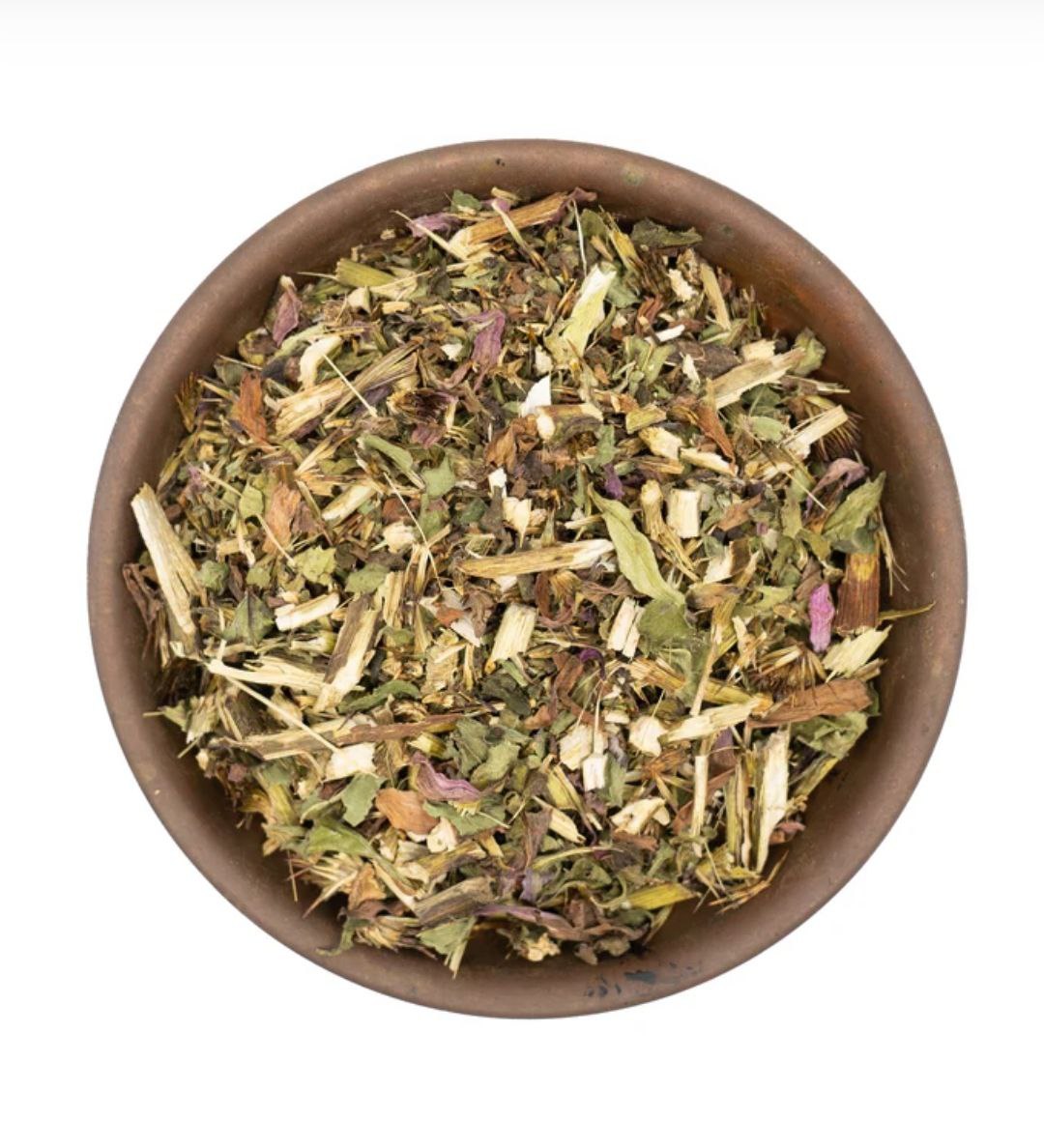


Echinacea Herb
Echinacea Herb is the traditional, natural form of echinacea, widely used in teas, tinctures, and poultices to support immunity, respiratory health, and skin healing.
Echinacea Herb refers to the aerial parts (leaves, stems, and flowers) of the Echinacea plant, most commonly Echinacea purpurea, though E. Angustifolia and E. pallida are also used. Unlike the extract, which is concentrated, the herb is used in its raw or dried form for teas, tinctures, and topical applications.
Echinacea Herb is a North American native plant, often called purple coneflower. Traditionally used by Indigenous peoples for wound care, infections, and immune support. Available as dried whole herb, cut/sifted leaves & flowers, or powdered herb.
Key Compounds in the Herb
- Alkamides → immune stimulation, mild numbing effect.
- Polysaccharides → boost white blood cell activity.
- Caffeic acid derivatives (like chicoric acid, echinacoside) → antioxidant properties.
- Flavonoids → help control inflammation.
✅ Health Benefits of Echinacea Herb
- Immune System Support: Helps fight off colds, flu, and mild infections. Can shorten the duration of colds when taken early.
- Respiratory Health: Supports recovery from sore throat, cough, and sinus congestion.
- Anti-Inflammatory Effects: May reduce mild swelling, joint discomfort, and gum irritation.
- Wound Healing & Skin Health: Used in poultices and washes for cuts, burns, eczema, and insect bites.
- General Wellness: Popular as a seasonal tonic to boost resilience against infections.
How to Use Echinacea Herb
- Tea/Infusion → Steep 1–2 tsp dried herb in hot water for 10–15 minutes.
- Tincture (DIY or purchased) → Herb soaked in alcohol or glycerin to extract actives.
- Poultice → Crushed fresh or rehydrated dried herb applied directly to skin.
- Capsules → Powdered herb in capsule form for convenience.
- Herbal blends → Often combined with elderberry, ginger, or licorice for immunity.
Precautions
- Safe for short-term use (1–2 weeks during illness).
- Not recommended for people with autoimmune conditions (like lupus, MS).
- Possible allergy risk if you are sensitive to ragweed, daisies, or marigolds.
- May interact with immunosuppressants and some liver-metabolized medications.
Fun Facts
- Native American tribes such as the Sioux and Cheyenne used echinacea for snakebites, infections, and sore throats.
- Early European settlers adopted it into herbal medicine, and it became one of the most used remedies in the U.S. before antibiotics.
- Today, echinacea is still among the top-selling immune-support herbs worldwide.
Specification: Echinacea Herb
|





There are no reviews yet.