
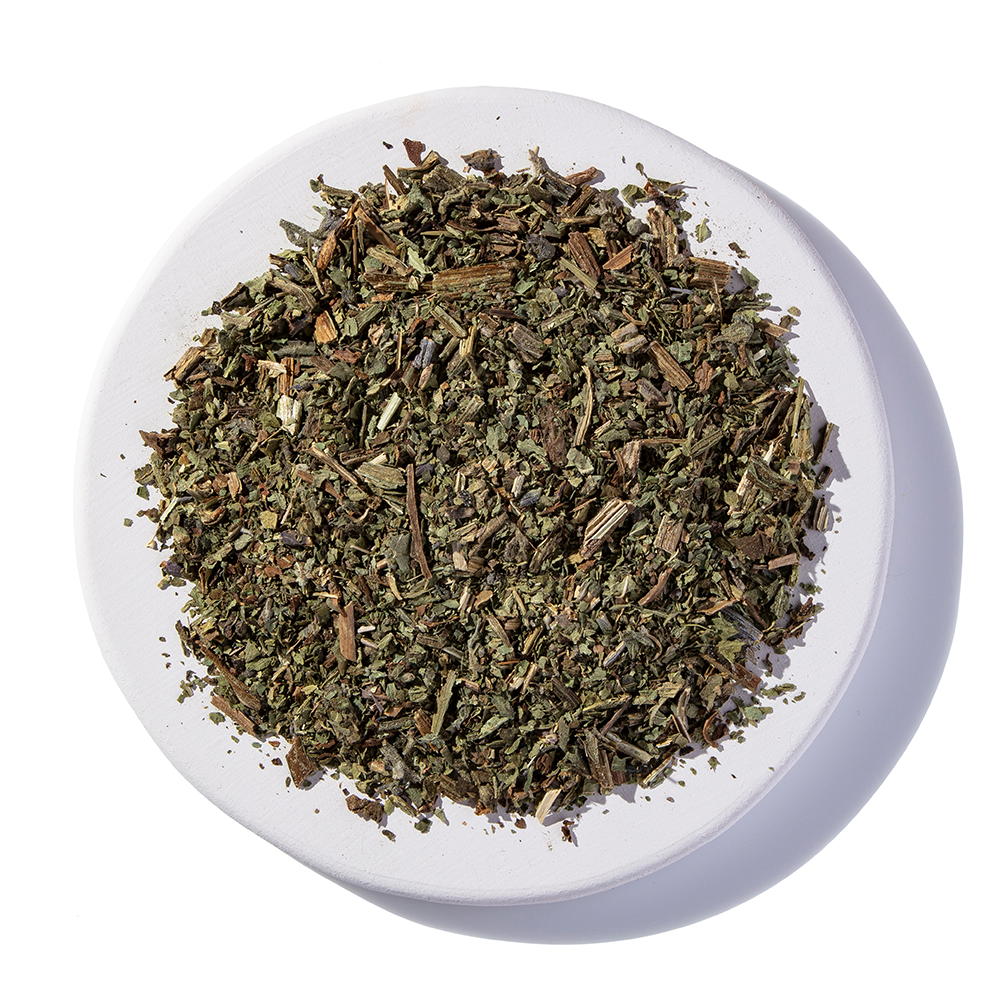


Comfrey Leaf
Comfrey leaf is a powerful healing herb for external use — excellent for wounds, bruises, bone healing, joint pain, and inflammation — but should not be taken internally due to potential liver toxicity.
Comfrey leaf (Symphytum officinale) is a traditional healing herb long used for wound care, bone health, and joint pain relief. It’s so effective that people once called it “knitbone” because of its ability to speed up the healing of bones and tissues.
Comfrey Leaf
- A perennial herb native to Europe and Asia, now found worldwide.
- Large, hairy leaves and bell-shaped flowers (purple, blue, or white).
- Traditionally used externally in poultices, salves, and compresses.
- Contains powerful compounds that promote tissue regeneration.
Key Compounds
- Allantoin → stimulates cell growth & tissue repair.
- Rosmarinic acid & tannins → anti-inflammatory.
- Mucilage → soothing and protective for skin.
- Pyrrolizidine alkaloids (PAs) → can be toxic to the liver if taken internally (important safety note).
✅ Health Benefits of Comfrey Leaf (Primarily Topical)
- Bone & Joint Support
- Speeds recovery from sprains, fractures, and bruises.
- Used for arthritis, back pain, and joint stiffness.
- Wound & Skin Healing
- Promotes healing of cuts, burns, ulcers, and skin irritations.
- Anti-Inflammatory
- Reduces swelling, pain, and inflammation.
- Bruises & Muscle Relief
- Helps with strains, contusions, and sore muscles.
Common Uses
- Poultices/compresses: Fresh or dried leaves crushed and applied to wounds, bruises, or sore joints.
- Salves & ointments: Infused comfrey leaf oil blended with beeswax for easy topical use.
- Herbal baths: Dried leaves added to warm baths for muscle and skin support.
Internal use (tea, capsules, tincture) is not recommended because of liver-toxic pyrrolizidine alkaloids.
Safety Precautions
- For external use only unless using specially prepared, PA-free extracts.
- Do not apply to deep wounds → may heal skin too quickly, trapping infection.
- Avoid during pregnancy and breastfeeding.
- Long-term, large-area topical use should be supervised.
Cultural & Historical Notes
- Used in European folk medicine since ancient times as “knucklebone.”
- Popular in medieval monastic herbalism for wound care.
- Still valued in modern herbalism, but with caution regarding internal use.
Specification: Comfrey Leaf
|




There are no reviews yet.