
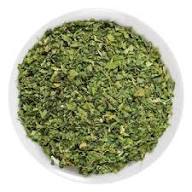
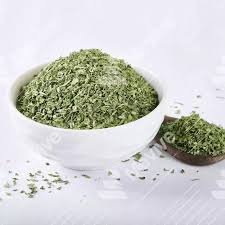
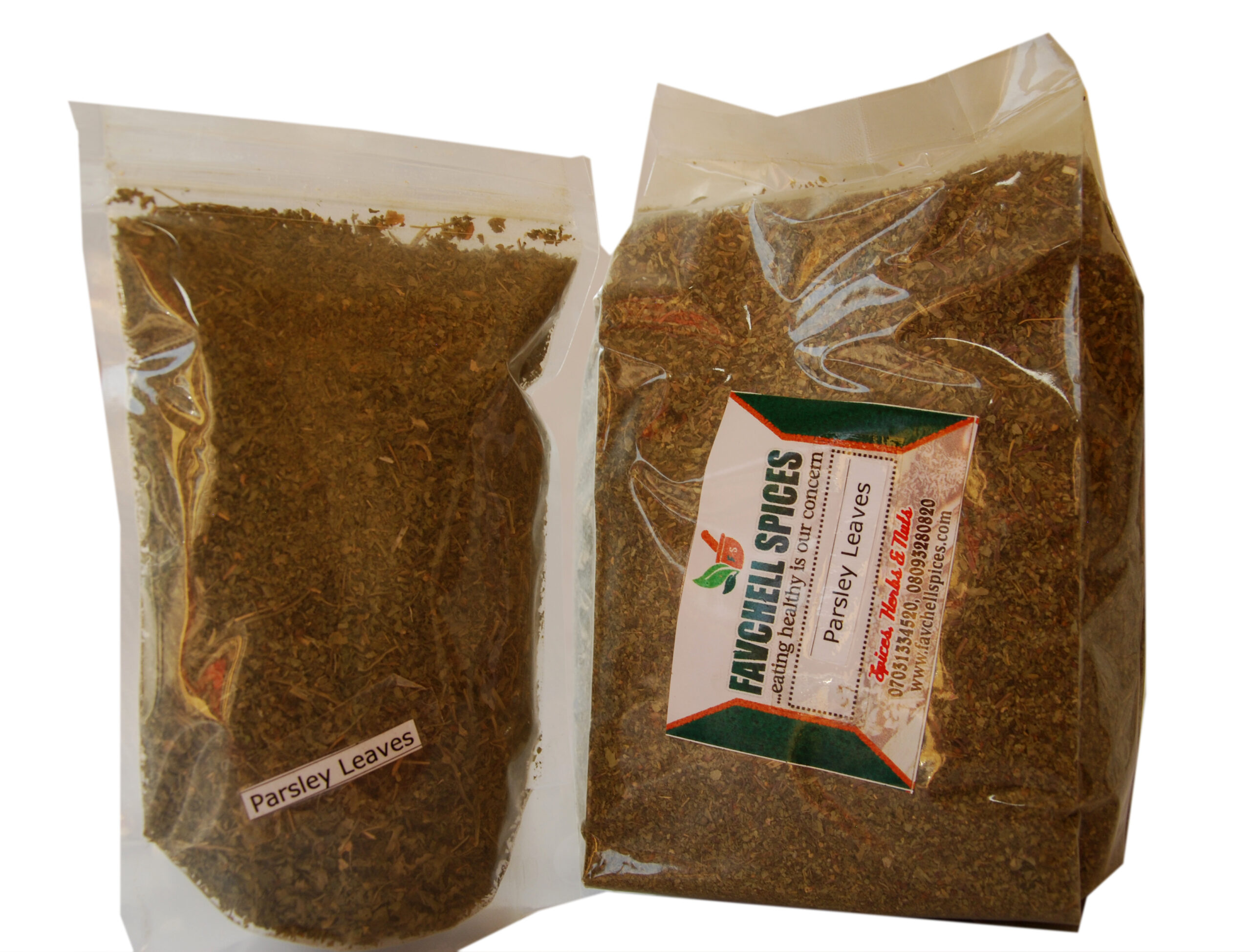
Parsley Leaf
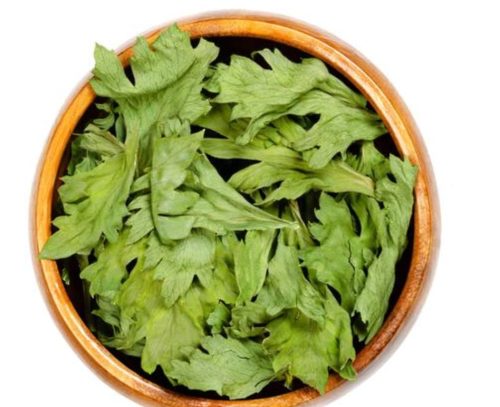
Parsley leaf, since it’s one of those common kitchen herbs that also doubles as a medicinal plant.
Price range: ₦3,000.00 through ₦9,500.00
What Parsley Is
- Botanical name: Petroselinum crispum
- Belongs to the carrot family (Apiaceae).
- Two main types:
- Curly-leaf parsley (frilly, often used as a garnish).
- Flat-leaf parsley (Italian parsley) (more aromatic, widely used in cooking).
- Both types have culinary and medicinal value.
Culinary Uses
- Fresh herbs in salads (like tabbouleh), soups, stews, and pasta.
- Adds a bright, slightly peppery, fresh taste.
- Often used as a garnish but also as a key flavor base in Mediterranean, Middle Eastern, and African cuisines.
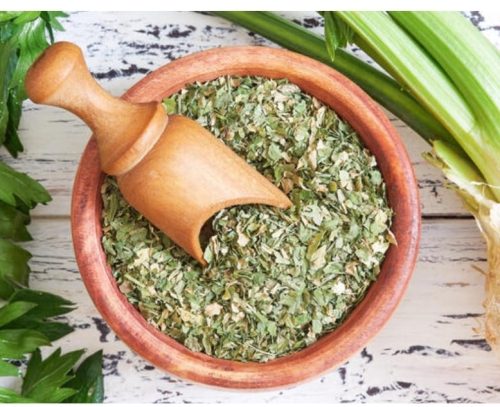
- Can be used fresh, dried, or powdered.
Nutritional Content (per 10g fresh leaves)
- Vitamin K – >100% daily value (supports blood clotting & bone health).
- Vitamin C – boosts immunity & collagen production.
- Vitamin A (beta-carotene) – supports vision & skin.
- Folate (B9) – important for DNA repair & pregnancy.
- Iron – for blood health.
- Antioxidants – apigenin, luteolin (anti-inflammatory & protective).
Medicinal & Health Benefits
- Kidney & urinary health
- Traditionally used as a mild diuretic (“water pill”) to help reduce bloating and flush excess water.
- May support kidney function, but should be used cautiously in kidney disease.
- Anti-inflammatory & antioxidant: Flavonoids reduce oxidative stress and support heart health.
- Bone health: Extremely high in Vitamin K — helps strengthen bones.
- Digestive support: Helps reduce gas, bloating, and indigestion.
- Immune booster: Vitamin C & antioxidants strengthen immunity.
- Breath freshener: Chewing fresh parsley leaves can neutralize bad breath (thanks to chlorophyll).
Precautions
- Pregnancy: Large amounts (especially parsley seed oil, not the leaf in food) may stimulate the uterus → avoid high doses.
- Kidney conditions: Because it’s a diuretic, it should be used carefully in those with kidney problems.
- Blood thinners (e.g., warfarin): High Vitamin K can interfere with medication — needs monitoring.
✅ How to Use
- Fresh: Chop and add to salads, soups, and rice dishes.
- Tea: Steep 1–2tsp dried parsley leaves in hot water, drink once or twice daily (mild diuretic & detoxifying).
- Powder: ½–1tsp added to smoothies, juices, or sprinkled over food.
Quick difference vs Paprika & Papaya/Pawpaw Leaf:
- Parsley leaf → mild herb, nutrient-rich, especially Vitamin K & C, good for kidney health and digestion.
- Papaya leaf powder → bitter, medicinal, supports platelet count & blood sugar.
- Paprika powder → culinary spice, rich in Vitamin A & antioxidants, adds flavor/color.
Specification: Parsley Leaf
|
User Reviews
Be the first to review “Parsley Leaf”
Related Products






Parsley Leaf
Price range: ₦3,000.00 through ₦9,500.00
There are no reviews yet.