


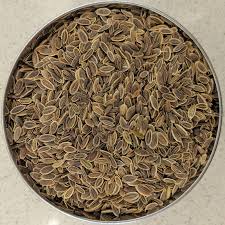

Dill Seed
Dill seed is a warming, aromatic spice that supports digestion, freshens breath, and adds flavor to pickles, breads, and herbal teas — both a kitchen and medicine cabinet favorite.
Dill seed comes from the dill plant (Anethum graveolens), which is famous for its feathery leaves (“dill weed”) and aromatic seeds. While dill leaves are widely used as a fresh herb, the seeds are more potent and slightly bitter, with a warm, caraway-like flavor. They’ve been used for cooking, digestion, and traditional medicine for centuries.
Dill Seeds
- Small, oval, brown to grayish-brown
- Flavor: pungent, slightly bitter, warm, and aromatic (similar to caraway, but milder).
- Used in spice blends, pickling, teas, and herbal remedies.
Nutritional & Active Compounds
- Essential oils: carvone, limonene, dillapiole (responsible for aroma & medicinal effects).
- Flavonoids → antioxidants that support cell health.
- Minerals: calcium, iron, magnesium, potassium, zinc.
- Fiber → supports digestion.
✅ Health Benefits of Dill Seed
- Digestive Aid: Eases bloating, indigestion, gas, and stomach cramps. Stimulates appetite.
- Antimicrobial Properties: Natural defense against some bacteria and fungi.
- Sleep & Relaxation: Traditionally used as a calming tea for stress and insomnia.
- Bone Health: Contains calcium and magnesium for strong bones.
- Menstrual Support: May help ease cramps and regulate cycles in traditional medicine.
- Oral Health: Chewing seeds freshens breath and may fight oral bacteria.
Culinary Uses of Dill Seed
- Pickling spice (classic for cucumbers, carrots, and other vegetables).
- Bread & crackers → adds caraway-like flavor.
- Soups, stews & curries → enhances warm, aromatic dishes.
- Herbal teas → soothing after meals for digestion.
- Seasoning meats & fish → balances fatty flavors.
Dill Seed Tea Recipe (Digestive Soother)
1 tsp dill seeds (lightly crushed)
1 cup boiling water
Steep 10 minutes → strain and sip after meals.
Safety & Precautions
- Generally safe in culinary amounts.
- In high medicinal doses → may cause allergic reactions in sensitive individuals.
- Pregnant & breastfeeding women should avoid large amounts of dill seed (tea or extract), as it may stimulate the uterus.
- May interact with diabetes medications (can lower blood sugar).
Fun Facts
- Ancient Egyptians used dill seeds as a soothing medicine for stomach pain.
- Romans chewed them to improve digestion after heavy feasts.
- In medieval Europe, dill was considered a protective herb against witchcraft and evil spirits!
Specification: Dill Seed
|


There are no reviews yet.