
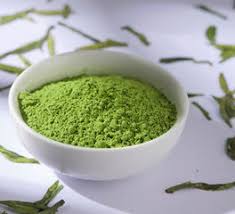
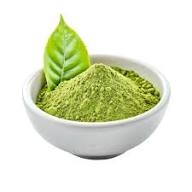
Green Tea Leaf Powder
For best quality, choose ceremonial-grade matcha for drinking, culinary-grade powder for recipes.
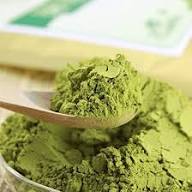
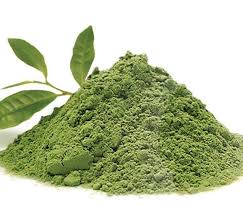
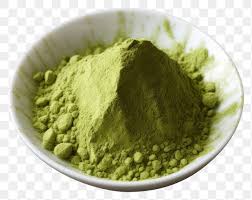
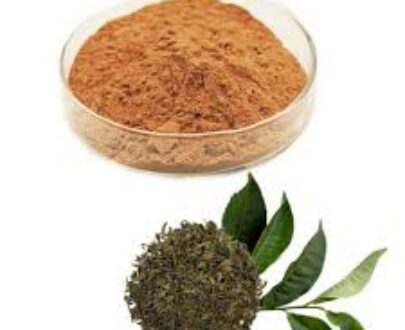
Green tea leaf powder is made by grinding dried green tea leaves (Camellia sinensis) into a fine powder. Unlike green tea extract (which isolates certain compounds) or brewed tea (which only infuses water-soluble components), the powder form allows you to consume the whole leaf, making it rich in antioxidants, fiber, and nutrients.
The most famous version is matcha, a Japanese stone-ground green tea, though other green tea powders exist and may be less refined.
What It Is
- Botanical name: Camellia sinensis
- Forms:
- Matcha: High-grade, shade-grown leaves, carefully ground to preserve nutrients.
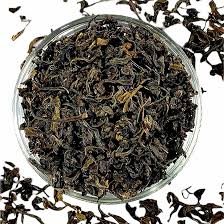
- Regular green tea powder: Ground leaves (lower grade, more bitter).
- Taste: Fresh, vegetal, grassy, slightly bitter, with umami (in matcha).
Nutritional Profile (per 1tsp 2g)
- Calories: 5–10
- Caffeine: 60–70mg (higher than brewed tea, closer to coffee)
- L-theanine: 20–30mg (calming effect)
- EGCG (epigallocatechin gallate): Very high antioxidant content
- Fiber: Small amounts, unlike brewed tea
Health Benefits of Green Tea Leaf Powder
- High Antioxidant Power
- Up to 137× more EGCG than brewed green tea (in matcha).
- Protects cells, slows aging, and reduces inflammation.
- Sustained Energy & Focus
- Caffeine + L-theanine → calm alertness (no coffee jitters).
- Improves mental clarity and concentration.
- Weight Management
- Boosts metabolism and fat burning.
- Often included in detox blends.
- Heart & Circulation Health
- May reduce LDL cholesterol.
- Improves blood vessel elasticity.
- Blood Sugar & Detox Support
- Enhances insulin sensitivity.
- Mild detox effect on the liver and kidneys.
- Skin & Anti-aging
- Catechins protect against UV damage.
- Used in face masks and beauty powders.
Traditional & Modern Uses
- Traditional Japanese tea ceremonies: Matcha prepared with a bamboo whisk (chasen).
- Ayurveda & wellness: Adopted as an energy and longevity tonic.
- Modern uses:
- Superfood lattes, smoothies, and desserts.
- Natural skincare masks.
- Energy blends for focus and weight loss.
Side Effects & Precautions
- Caffeine sensitivity: Can cause jitters or insomnia if taken late in the day.
- Stomach irritation: May cause nausea if taken on an empty stomach.
- Overuse: Very high doses (especially extracts, not powder) may stress the liver.
- Drug interactions: May affect blood thinners, stimulant drugs, or diabetes meds.
How to Use Green Tea Leaf Powder
- Tea preparation:
- Matcha style → whisk ½–1 tsp powder into 60–100 ml hot water (75–85 °C).
- Lattes: Blend with warm milk or plant milk for a matcha latte.
- Smoothies & juices: Add 1 tsp to smoothies for a boost.
- Culinary uses: Bake into cakes, cookies, pancakes, or energy bars.
- Skincare: Mix with honey, yogurt, or aloe as a face mask.
Green Tea Leaf Powder vs. Extract vs. Brewed Tea
| Form | Strength | Caffeine | Best Use |
| Powder (matcha/leaf powder) | Whole leaf antioxidants + fiber | High | Drinking, smoothies, lattes, baking |
| Extract | Standardized catechins (EGCG) | Moderate | Supplements, weight loss, skincare |
| Brewed tea | Moderate antioxidants | Low-moderate | Daily drinking, hydration |
Specification: Green Tea Leaf Powder
|



There are no reviews yet.